




5 Home Air Quality Tips: How to Maintain Fresh Indoor Air Daily
We spend nearly 90% of our time indoors, yet most of us rarely think about the air we breathe at home. From cooking fumes to pet dander and hidden chemicals in furniture, indoor air can be 2 to 5 times more polluted than outdoor air. The good news? Keeping your indoor air fresh and healthy doesn't require expensive equipment or a complete home makeover. With a few daily habits and smart choices, you can significantly improve your home air quality and create a cleaner, more comfortable living space.
Below are 5 practical indoor air quality tips that you can start using today to maintain fresh indoor air daily.
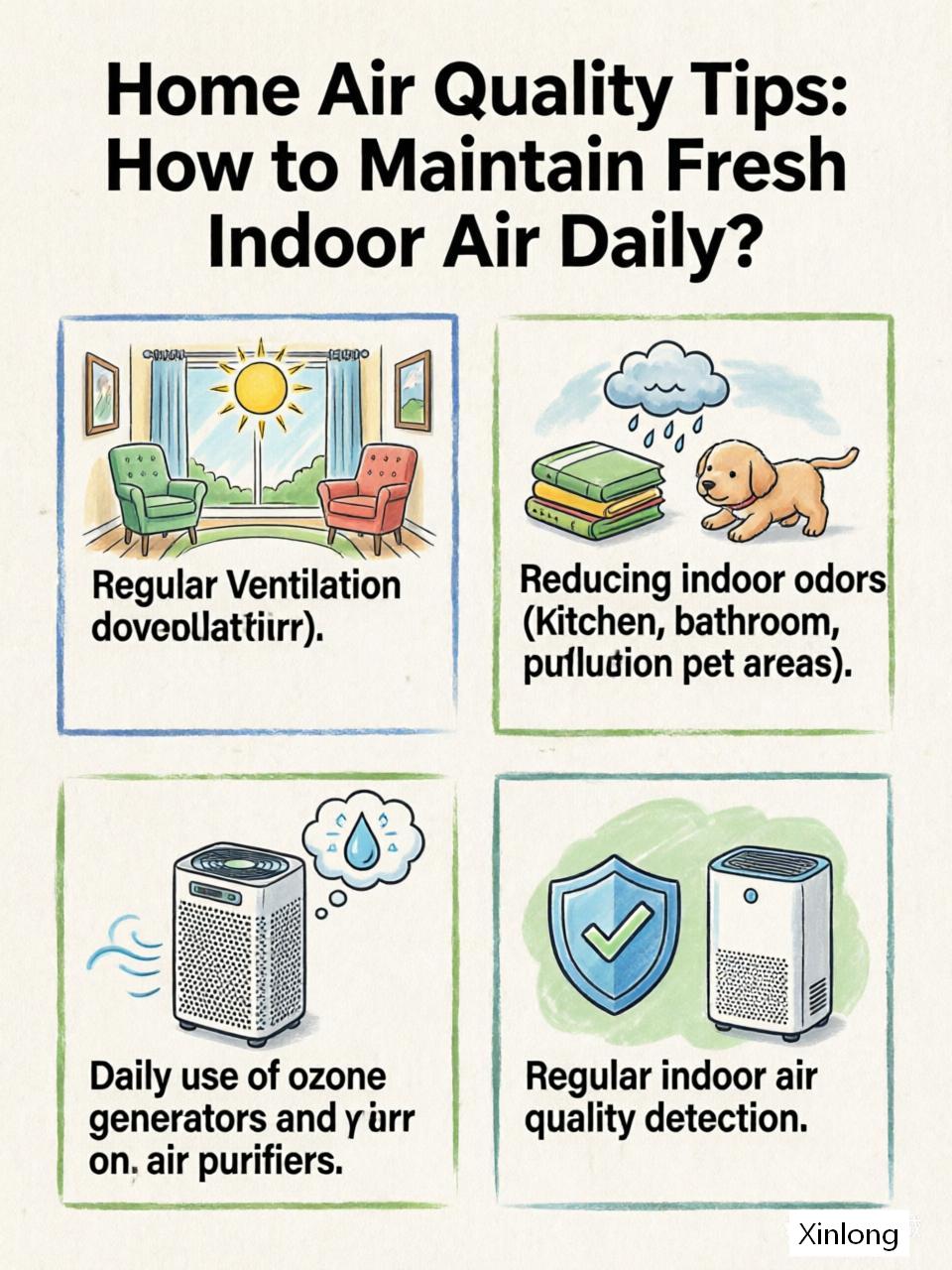
1. Master the Art of Regular Ventilation – Timing & Techniques
Proper ventilation is the simplest and most effective way to refresh indoor air. But simply opening a window isn’t enough – timing and technique matter.
Best times to ventilate:
- Early morning (7–9 AM) and late evening (after 8 PM) when outdoor air pollution (traffic, pollen) is lower.
- During or right after cooking, showering, or cleaning – these activities release moisture, odors, and chemicals.
Smart ventilation tips:
- Cross-ventilation – Open windows on opposite sides of your home to create a breeze that flushes out stale air within minutes.
- 20-minute rule – Even in winter, open windows for at least 20 minutes daily. A short but powerful air exchange removes CO₂, volatile organic compounds (VOCs), and indoor humidity.
- Use exhaust fans – In kitchens and bathrooms, run exhaust fans for 15–20 minutes after cooking or showering to eliminate moisture and odors at the source.
Pro tip: Check outdoor air quality index (AQI) before ventilating. On high-smog days, ventilate only during off-peak hours or rely on mechanical ventilation.
2. How to Reduce Indoor Odors – Kitchen, Bathroom & Pet Areas
Persistent odors aren’t just unpleasant – they often signal trapped moisture, bacteria, or chemical residues. Here’s how to tackle the three most common sources:
🍳 Kitchen
- Clean garbage disposal weekly with ice cubes and lemon peels.
- Use a simmer pot (water + cinnamon sticks + citrus slices) on the stove to naturally deodorize while adding a fresh scent.
- Never leave dirty dishes overnight – food residues release odorous gases as they decompose.
🚽 Bathroom
- Fix leaky pipes immediately – hidden moisture breeds mold and musty smells.
- Switch to a vent fan with a humidity sensor that runs automatically.
- Place a small bowl of baking soda in a corner – it absorbs odors without masking them.
🐾 Pet Areas
- Wash pet bedding every 3–4 days in hot water with vinegar (kills bacteria and neutralizes ammonia).
- Vacuum upholstery and carpets with a HEPA-filter vacuum to remove dander and hair.
- Use an air purifier with an activated carbon filter near litter boxes or pet beds – it captures odor molecules instead of covering them up.
For immediate odor relief, a quick 20-minute ventilation burst combined with a baking soda sprinkle (vacuum after 1 hour) works wonders.
3. How to Avoid Indoor Air Pollution – Smart Material & Furniture Choices
Many people don't realize that new furniture, paints, and flooring can release harmful chemicals for months or even years. Prevention is far easier than cleanup.
✅ When renovating or buying furniture:
- Look for low-VOC or zero-VOC labels – Paints, varnishes, adhesives, and sealants with this certification reduce formaldehyde and benzene levels.
- Choose solid wood over composite wood – Particleboard, MDF, and plywood often contain urea-formaldehyde resins that off-gas for years. If budget is a concern, look for products labeled “CARB Phase 2” compliant (low-formaldehyde).
- Avoid stain-resistant and waterproof treatments – These often use perfluorinated chemicals (PFAS) which accumulate in indoor dust.
🛋️ For existing furniture:
- Accelerate off-gassing – Place new furniture in a well-ventilated room or garage for 2–3 weeks before bringing it into your main living area.
- Use an air purifier with a VOC sensor – It will automatically ramp up when chemical levels rise (e.g., after unpacking new items).
🧼 Household products matter too:
- Switch to fragrance-free, plant-based cleaners – many “fresh scent” products contain phthalates and synthetic musks that degrade indoor air quality.
- Never mix bleach with ammonia or acids (like vinegar) – this creates toxic chloramine gas.
By being selective with materials and products, you can avoid indoor air pollution before it becomes a problem.
4. Daily Use Tips for Ozone Generators & Air Purifiers
Air purifiers and ozone generators are powerful tools, but they are often misunderstood or misused. Here’s how to use them safely and effectively for fresh indoor air daily.
🌬️ Air purifiers (safe for occupied rooms)
- Run continuously on low or medium speed – stopping and starting reduces effectiveness. Most modern units are energy-efficient (30–50 watts).
- Placement matters – Keep 1–2 feet away from walls and furniture. Position near the source of pollution (e.g., litter box, kitchen) or where you spend most time (bedroom, home office).
- Replace filters on time – HEPA filters last 6–12 months; carbon filters 3–6 months. A clogged filter recirculates trapped particles and smells.
⚡ Ozone generators (use with extreme caution)
Ozone generators can destroy stubborn odors (smoke, mold, pet accidents) by oxidizing molecules. However, ozone is a lung irritant and harmful to humans, pets, and plants.
Safe usage rules:
- NEVER use in an occupied room – Evacuate all living beings (including houseplants).
- Use only for targeted treatments – Run the generator for 1–4 hours in a closed, empty room, then air out the room for at least 30 minutes before re-entering.
- Frequency – Once a month maximum for problem areas, not daily.
- Better alternative for daily use – Stick with an air purifier (mechanical filtration + carbon) for ongoing freshness. Reserve ozone generators for deep cleaning after events like flooding, fire, or heavy smoking.
Important: Some small “ozone air purifiers” sold for home use are actually ionizers – they produce very little ozone and are generally safe. True ozone generators should never run while you’re home.
5. How to Detect Indoor Air Quality Regularly
You can’t manage what you don’t measure. Regular monitoring helps you spot problems early – before they cause health issues.
🛠️ Affordable ways to check your air:
| Tool | What it detects | Cost |
|---|---|---|
| CO₂ monitor | Stale air, poor ventilation | $30–100 |
| Particle counter (PM2.5) | Dust, smoke, pollen | $50–150 |
| Humidity meter | Mold risk (ideal range: 30–50%) | $10–30 |
| Formaldehyde test kit | Off-gassing from furniture | $20–40 |
| VOC sensor (TVOC) | Chemicals from cleaners, paints, cooking | $50–200 |
👃 Don’t ignore your senses
- Musty smell → Check hidden mold (under sinks, behind washing machines).
- Sharp chemical odor → Likely VOCs – ventilate immediately.
- Stuffy feeling/headaches → High CO₂ – increase fresh air intake.
📋 Simple weekly routine:
- Check humidity levels – use a dehumidifier if >55%.
- Look at your air purifier’s pre-filter – if it’s gray/dusty after a few days, vacuum more often.
- Do the “sniff test” in each room – if something smells off, identify the source.
For tech-savvy users, an all-in-one indoor air quality monitor (e.g., from Temtop, Awair, or Qingping) sends real-time data to your phone and alerts you when levels spike.
Final Takeaway
Maintaining fresh indoor air isn’t about buying the most expensive gadget – it’s about consistent small actions: ventilating smartly, reducing odors at their source, choosing low-pollution materials, using air purifiers correctly, and monitoring your air quality regularly.
Start with one tip today. In one week, you’ll notice the difference – clearer breathing, fewer headaches, and a home that genuinely feels fresh.
Want to explore tools to improve your home air quality? Check out our selection of certified air purifiers, VOC sensors, and safe ozone generators – designed for real-world homes, not lab conditions.
Related Posts