




Commercial Ice Machine Sanitization: How Ozone Prevents Slime & Mold
Commercial Ice Machine Sanitization: Installing Automatic Ozone Disinfectants to Prevent Slime and Mold
If you manage a commercial kitchen, a high-volume bar, or a seafood processing cold chain, you already know the hidden enemy lurking inside your ice maker: bio-slime, mold, and pink yeast.
Despite regular manual cleanings, warm, moist environments combined with lingering organic residues create a breeding ground for bacteria like Pseudomonas and E. coli. Not only do these contaminants ruin the taste and odor of ice, but they also trigger failed health inspections, foul-smelling beverages, and costly equipment breakdowns.
Traditional manual scrubbing with harsh chemicals is labor-intensive, disruptive to daily operations, and often misses internal water lines and evaporator components. That is why commercial equipment buyers and facility managers are shifting toward automated inline ozone sanitation systems.
In this guide, we break down how commercial ice machine ozone technology works, why it solves ice maker slime prevention, and how integrating an automated restaurant ice generator sanitization system can protect your business, reduce maintenance overhead, and elevate your water treatment standards.
The Hidden Cost of Bio-Slime in Commercial Ice Makers
Ice is legally classified as food. Yet, commercial ice machines are notorious for developing a slimy, pinkish-black biofilm along water troughs, distribution tubes, and storage bins.
When ice machines are left untreated:
- Taste and Odor Contamination: Biofilms produce sulfur-like smells and foul tastes that instantly ruin high-end cocktails, fountain drinks, and seafood presentation displays.
- Health and Safety Liabilities: Mold spores and pathogenic bacteria pose serious cross-contamination risks to consumers, potentially resulting in failed food safety audits.
- Premature Equipment Wear: Mineral scaling combined with biological growth restricts water flow, forcing compressors to overwork and leading to premature component failure.
While scheduled cleanings help, they are reactive. By the time a technician scrubs the machine, contamination has already impacted dozens of batches of ice. Automated ozone disinfection offers a proactive, continuous defense mechanism.
How Automated Ozone Systems Work in Ice Machines
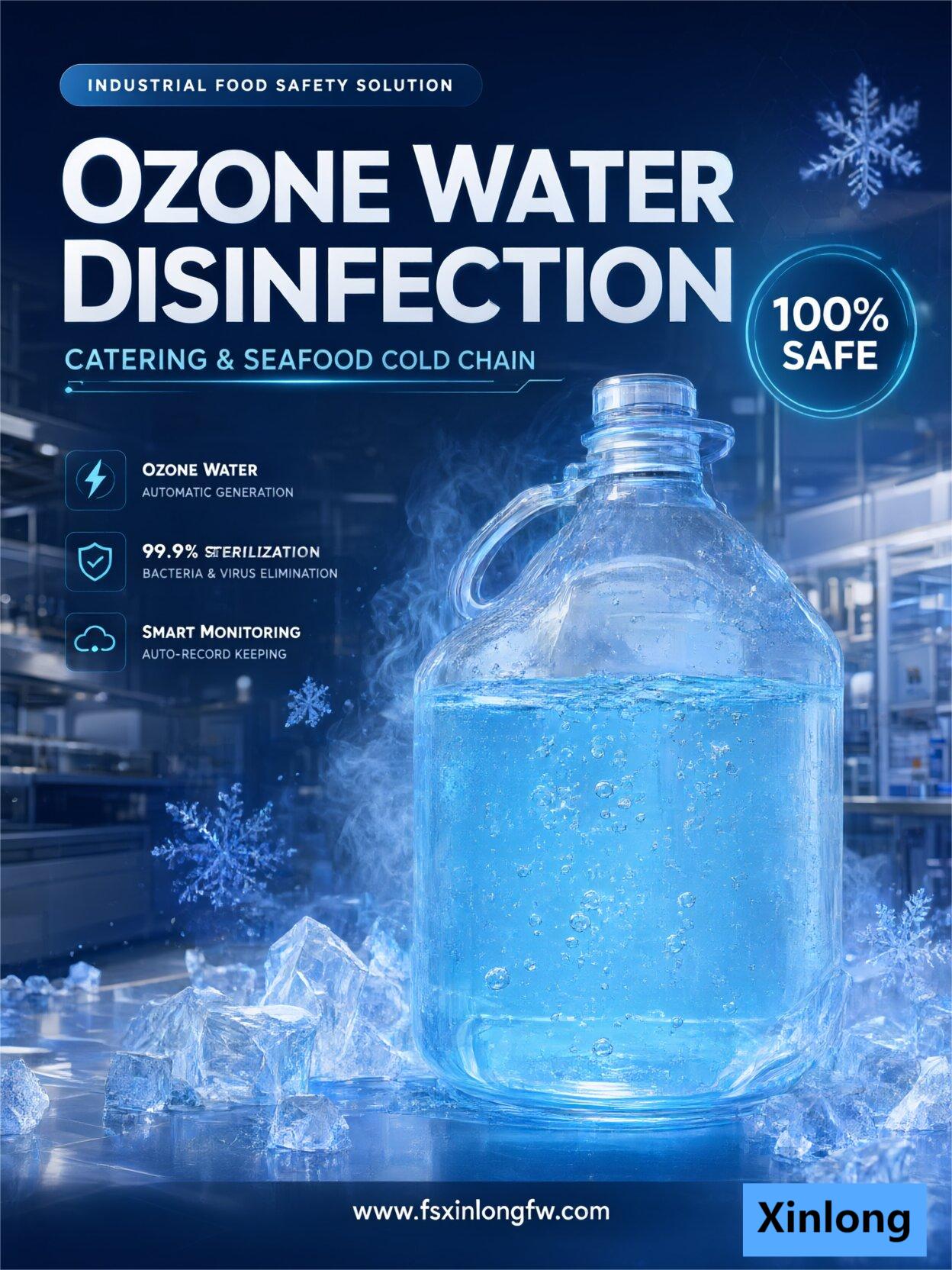
Ozone (O3) is one of the most powerful natural oxidizers available. When integrated into a commercial ice machine’s water supply line, an electrolytic ozone generator produces aqueous ozone on demand.
As water flows through the machine to freeze into ice, the ozonated water continuously sanitizes every surface it touches:
- Targeted Oxidation: Ozone molecules instantly destroy cell walls of bacteria, mold, yeast, and viruses upon contact without leaving harmful chemical residues.
- Residue-Free Breakdown: Unlike chlorine or heavy chemical sanitizers, ozone rapidly reverts back to regular oxygen (O2), ensuring the ice remains crystal clear, odorless, and completely safe for human consumption.
- Automated Cycle Control(or Timer): The system can be programmed to pulse ozone into the water inlet during specific production or standby cycles, ensuring 24/7 internal pipe and bin sanitization without manual intervention.
Key Benefits for Restaurants, Bars, and Seafood Cold Chains
Installing a commercial ice machine ozone disinfection setup delivers immediate operational and financial advantages across various food service sectors:
- Eliminate Manual Cleaning Downtime: Drastically reduce the frequency of intensive acid washing and manual scrubbing. Your staff saves hours of labor every month.
- Protect Seafood Freshness and Quality: In seafood cold chains, melting ice contaminated with bacteria accelerates spoilage. Ozonated ice extends the shelf life of displayed fish, shrimp, and shellfish by inhibiting microbial decay.
- Extend Equipment Lifespan: By preventing scale-accelerated biofilm buildup, internal pumps, valves, and water distribution tubes last significantly longer with fewer emergency service calls.
- Compliance and Peace of Mind: Easily pass local health department inspections with a documented, automated sanitation protocol that proves active bacterial control.
Engineering Considerations: Selecting the Right Ozone System
When sourcing an ozone generator for commercial ice production, B2B buyers and equipment distributors should evaluate a few critical parameters:
- Water Flow Rate & Ice Capacity: Match the ozone output (measured in mg/h) to your daily ice production tonnage (whether you operate a 500 lbs/day modular unit or a multi-ton industrial flake ice plant).
- Material Compatibility: Ensure all wetted parts—such as internal tubing, check valves, and mixing chambers—are ozone-resistant (utilizing PTFE, PVDF, or stainless steel).
- Integration Flexibility: Look for compact, modular systems that can be easily retrofitted onto existing Manitowoc, Hoshizaki, or Scotsman ice makers without altering primary refrigeration loops.
Upgrade Your Commercial Ice Systems Today
Are you a restaurant chain operator, bar equipment distributor, or water treatment contractor looking to upgrade your maintenance protocols? Integrating automated ozone technology sets your business apart by delivering self-sanitizing, low-maintenance ice production solutions.
Explore our range of commercial ozone water generators and heavy-duty oxidation systems designed specifically for water treatment and ice machine sanitization.
[Browse Our Commercial Ozone Systems] | [Contact Our Engineering Team for Custom Integration Specs]
Tags:
Related Posts