




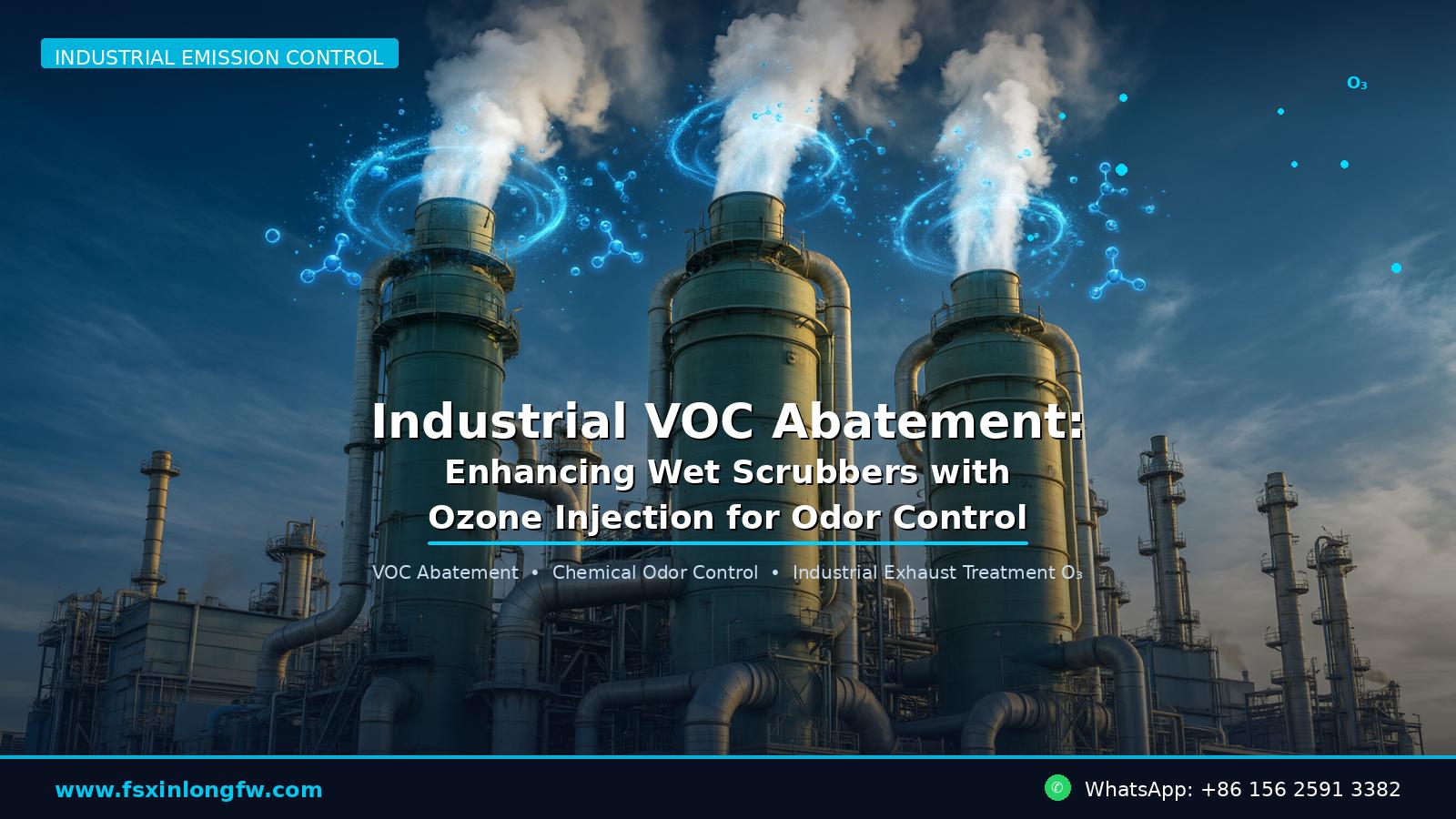
Industrial VOC Abatement: Enhancing Wet Scrubbers with Ozone Injection for Odor Control
Industrial VOC Abatement: Enhancing Wet Scrubbers with Ozone Injection for Odor Control
Neighbor complaints over solvent smells, ammonia, sulfur compounds, or resin fumes can shut down production faster than equipment wear. For chemical processors, rubber vulcanization lines, and industrial coating plants, standard water or caustic wet scrubbers often knock down coarse particulates and highly water-soluble gases—yet stubborn volatile organic compounds (VOCs) and odor-causing hydrocarbons slip right through the stack.
Injecting ozone directly into an existing wet scrubber offers a practical retrofit path. Instead of tearing out the tower or jumping straight to high-energy thermal oxidizers, plant engineers and environmental contractors can upgrade liquid-phase and gas-phase oxidation using controlled ozone dosing.
Why Standard Scrubbers Struggle with VOCs and Process Odors
A conventional packed or spray scrubber relies heavily on gas solubility and acid-base neutralization. While that works well for acidic vapors or dust, many industrial VOCs and odorous intermediates have low solubility in plain water. When they pass through the scrubbing liquid without reacting, they exit the chimney and trigger odor violations downwind.
Common trouble spots across industries include:
- Chemical manufacturing: Unreacted solvents, aldehydes, amines, and mercaptans released during batch reactors, tank breathing, or transfer operations.
- Rubber and elastomer processing: Curing and vulcanization off-gases containing complex organic compounds and pungent sulfur/amine odors.
- Coatings, adhesives, and printing: Drying ovens and spray booths emitting mixed aromatic or oxygenated VOCs alongside sharp solvent smells.
How Ozone Injection Upgrades a Wet Scrubber
Ozone (O3) is a strong oxidant that reacts rapidly with double bonds, odorous sulfur and nitrogen compounds, and many organic molecules that resist mild chemical scrubbing. When paired with a wet scrubber, ozone typically acts in two ways:
- Gas-Phase and Interface Oxidation: Ozone introduced into the gas stream or scrubbing zone helps break down odorous and reactive organic compounds into more oxidized, often more water-soluble or less odorous byproducts that are easier to capture in the scrubbing liquor.
- Scrubbing Water Regeneration: Injecting ozone into the recirculating scrubbing water helps oxidize accumulated organic load and odor precursors in the liquid loop, keeping water quality more stable and reducing secondary odor release from holding tanks.
For environmental engineering firms and plant maintenance teams, this retrofit approach is attractive because it builds on existing tower shells, ductwork, and recirculation pumps rather than requiring a full-plant rebuild.
Practical Sizing and Engineering Checks Before You Retrofit
Ozone is not a "drop-in magic wand" for every exhaust stream. Proper sizing depends on real operating numbers rather than guesswork:
- Exhaust flow rate and VOC/odor load: Higher airflows and heavier peak solvent or odor concentrations require higher ozone output (g/h or kg/h).
- Gas temperature and moisture: Hot exhaust gases accelerate ozone thermal decomposition, while high moisture or sticky aerosols can foul injection points or mist eliminators if pre-conditioning is needed.
- Residence time and mass transfer: Effective contact between ozone and target compounds depends on gas-liquid contact design, pH, and reaction time inside the scrubber or oxidation stage.
- Off-gas ozone control and safety: Residual ozone must never escape into work areas or exceed stack limits. Proper sealing, ozone leak monitoring, and destruct/vent handling are essential parts of a safe installation.
Choosing the Right Industrial Ozone System
Different plant scales call for different equipment configurations:
- Light-industrial or pilot/spot odor control: Smaller, modular ozone generators suit localized exhaust streams, testing, or compact pretreatment setups.
- Continuous chemical, rubber, or coating plant lines: High-output industrial ozone generators—configured with air-fed or oxygen-fed generation depending on concentration and operating cost targets—provide steady dosing for round-the-clock operations.
If you are evaluating a scrubber upgrade for a chemical, rubber, or coating facility, share your exhaust airflow (m^3/h or CFM), main VOCs or odor compounds, exhaust temperature, and current scrubber type. Our team can help review technical requirements and recommend a suitable industrial ozone generator configuration.
- Explore Industrial Ozone Generators | View Exhaust & Odor Applications | Request a Quote / Contact Us
Tags:
Related Posts