




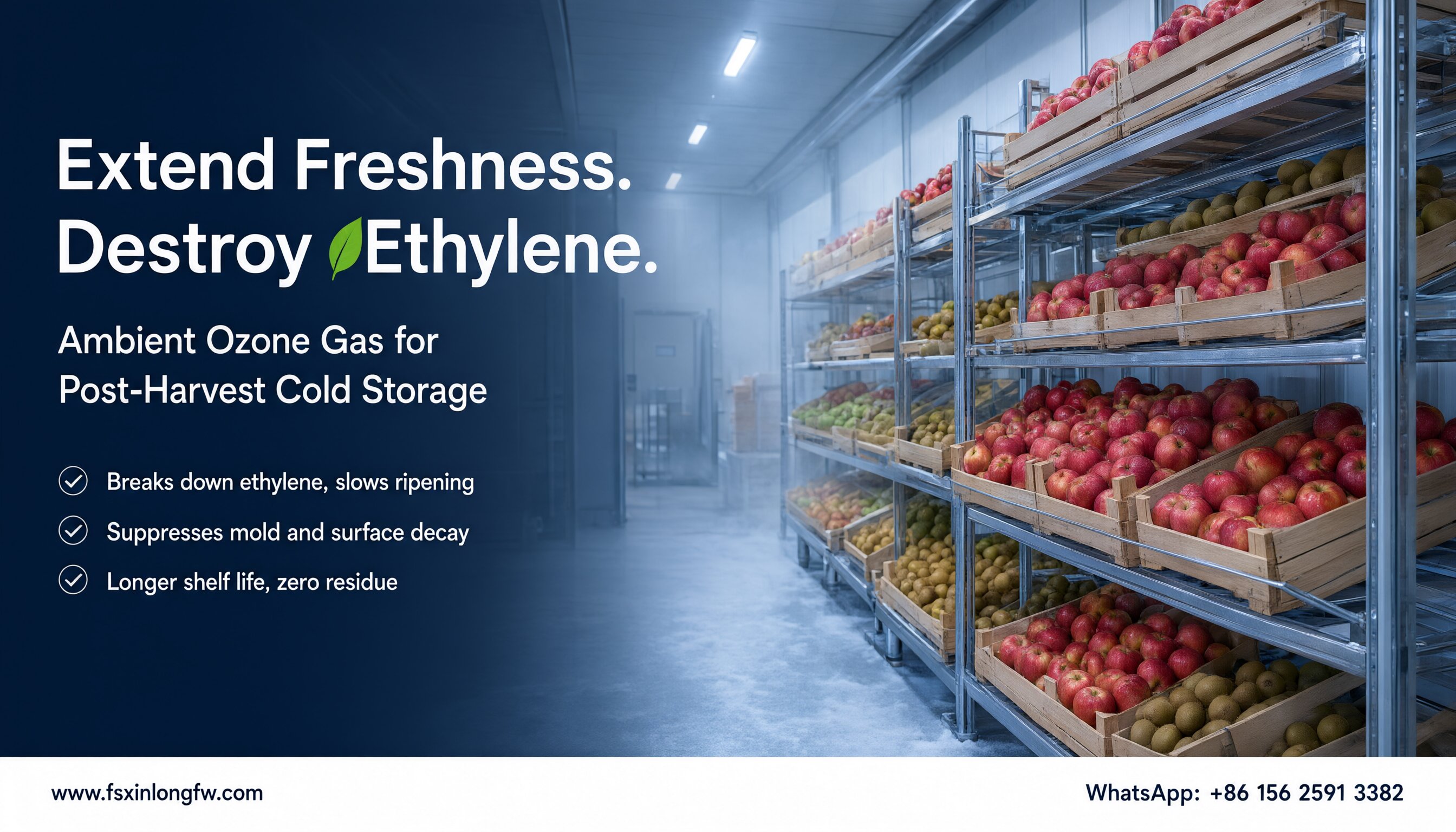
Post-Harvest Cold Storage: How Ambient Ozone Gas Removes Ethylene and Extends Produce Shelf Life
Post-Harvest Cold Storage: How Ambient Ozone Gas Removes Ethylene and Extends Produce Shelf Life
For commercial cold storage operators and fresh produce exporters, few things hurt profit margins faster than premature ripening and fungal decay. Even with precise temperature and humidity controls, high-value crops like apples, bananas, kiwis, berries, and leafy greens remain vulnerable to an invisible threat inside the warehouse: ethylene gas.
When combined with airborne mold spores, ethylene triggers a chain reaction of softening, discoloration, and rot—often leading to rejected shipments and significant post-harvest losses.
Increasingly, commercial facilities are turning to ambient ozone gas as a dual-action solution. Unlike chemical fungicides or single-purpose scrubbers, low-concentration ozone simultaneously neutralizes ethylene and sanitizes the cold room environment without leaving chemical residues on the fruit.
The Dual Threat in Cold Storage: Ethylene and Airborne Mold
To understand why ozone cold storage for produce is so effective, it helps to look at the two primary drivers of post-harvest spoilage:
- The Ethylene Chain Reaction: Climacteric fruits (such as apples, pears, bananas, avocados, and tomatoes) naturally emit ethylene (C2H4) as they ripen. In a sealed cold room, this gas accumulates rapidly. Even trace amounts—less than 1 part per million (ppm)—can accelerate the ripening of neighboring ethylene-sensitive crops, drastically shortening their marketable window.
- High-Humidity Mold Growth: Cold storage facilities operate at high relative humidity (often 85%–95%) to prevent produce from dehydrating. Unfortunately, these exact conditions allow Botrytis (gray mold), Penicillium (blue/green mold), and surface bacteria to thrive on wooden bins, cooling coils, and fruit skins.
Traditional ventilation helps flush out ethylene, but constantly bringing in warm outside air spikes refrigeration energy costs. Chemical washes and sprays add labor, moisture, and regulatory headaches regarding Maximum Residue Limits (MRLs) in export markets.
How Ethylene Removal via Ozone Gas Storage Works
Ozone (O3) is a powerful, naturally occurring oxidizing agent composed of three oxygen atoms. When introduced into a cold room at carefully controlled, low concentrations, it solves both ethylene buildup and microbial contamination in a single automated process:
- Direct Ethylene Oxidation: Ozone reacts directly with the double carbon bond in ethylene gas, breaking it down into harmless byproducts: carbon dioxide (CO2), water vapor (H2O), and oxygen (O2). By continuously scrubbing ethylene from the air, ethylene removal via ozone gas storage keeps climacteric produce in a dormant, fresh state for weeks longer.
- Airborne and Surface Sanitization: As ozone circulates through the cold room's existing HVAC or evaporator fans, it penetrates hard-to-reach corners, pallet gaps, and packaging crevices. It destroys the cell walls of airborne mold spores and surface bacteria before they can colonize bruised or vulnerable fruit.
- Zero Chemical Residue: After oxidizing ethylene or pathogens, unstable ozone molecules naturally revert back into pure oxygen. There is no chemical residue left on the produce, making it fully compliant with organic standards and strict international import regulations.
Key Benefits of Using Ozone to Extend Fruit Shelf Life
Implementing a properly sized industrial ozone generator in your cold chain facility delivers measurable operational advantages:
| Challenge | Traditional Method | Ambient Ozone Solution |
| Ethylene Buildup | Potassium permanganate sachets (require frequent manual replacement) | Continuous, automated gas-phase oxidation with zero media waste |
| Mold & Cross-Contamination | Chlorine dips or post-harvest chemical fungicides | Dry, gas-phase sanitation that reaches all surfaces without wetting produce |
| Odor Transfer | Active carbon filters or heavy air exchange | Neutralizes volatile organic compounds (VOCs) so mixed loads don't absorb odors |
| Energy Efficiency | Frequent fresh-air venting (increases chiller load) | Reduces venting frequency, lowering refrigeration electricity bills |
Recommended Ozone Concentrations by Produce Type
Precision matters when applying ozone in cold rooms. Over-exposing delicate produce to high ozone levels can cause surface pitting or physiological stress, while under-dosing won't effectively suppress ethylene or mold.
Below are typical continuous ambient ozone concentration benchmarks used in commercial cold storage:
- Apples, Pears & Kiwis: 0.1 – 0.3 ppm (Highly effective for long-term controlled atmosphere storage; prevents scald and gray mold).
- Berries (Strawberries, Blueberries, Grapes): 0.1 – 0.2 ppm (Dramatically slows Botrytis gray mold during pre-cooling and transit).
- Citrus Fruits (Oranges, Lemons): 0.2 – 0.5 ppm (Controls Penicillium green mold and prevents cross-contamination from spoiled fruit).
- Root Vegetables & Onions: 0.2 – 0.4 ppm (Inhibits sprouting and surface fungal growth during multi-month storage).
- Empty Room Shock Sanitization (Between Batches): 2.0 – 5.0 ppm for 2–4 hours (Deep-cleans walls, floors, and evaporator coils before loading fresh harvest).
(Note: Always verify specific cultivar tolerances and ensure cold rooms are equipped with an integrated ozone monitor and automated controller to maintain exact ppm levels.)
Selecting the Right Industrial Ozone Generator for Your Cold Room
Not all ozone machines are built for the harsh, high-humidity, low-temperature environment of a commercial chiller. Standard air-cooled units often fail prematurely due to internal condensation and nitric acid buildup.
When sourcing an industrial ozone system for cold storage, look for these essential engineering features:
- Oxygen-Fed Corona Discharge: Units equipped with a built-in oxygen concentrator produce higher-purity ozone without generating harmful nitrogen oxides (which can damage fruit skin and corrode evaporator coils).
- Moisture-Resistant Enclosure: High humidity inside cold rooms demands stainless steel housings and moisture-protected quartz.
- External Installation with PTFE Tubing: For sub-zero or near-freezing rooms, mounting the ozone generator outside the cold room and piping ozone gas in via ozone-resistant PTFE tubing protects the electronics and simplifies maintenance.
- PPM Sensor Control: A closed-loop ambient ozone sensor ensures the generator automatically cycles on and off to hold your exact target concentration (e.g., 0.15 ppm) safely and consistently.
Looking for a reliable ozone solution for your cold storage facility?
Explore our range of Industrial Oxygen-Fed Ozone Generators designed specifically for high-humidity agricultural and cold chain environments.
Frequently Asked Questions (FAQ)
Is ozone safe for workers inside the cold storage warehouse?
OSHA and international safety standards typically set the 8-hour Permissible Exposure Limit (PEL) for ozone at 0.1 ppm. When operating systems at 0.15–0.5 ppm, facilities use automated timers or door-interlock switches that pause ozone generation whenever workers enter the room, allowing levels to drop safely within minutes.
Can ozone damage sensitive fruits or vegetables?
Only if concentrations exceed the specific crop's tolerance threshold. Leafy greens and mushrooms are more sensitive and require lower doses (0.05–0.1 ppm), whereas citrus and root crops tolerate higher levels. Using an automated ppm controller eliminates the risk of over-dosing.
How do I calculate the right ozone output (g/h) for my cold room?
Sizing depends on your room's total cubic volume, ambient temperature, relative humidity, and the specific type and tonnage of produce stored. As a general rule of thumb, commercial produce cold rooms typically require 1 to 3 grams per hour (g/h) per 100 cubic meters of storage space, paired with a sensor controller.
Upgrade Your Post-Harvest Preservation Today
Reducing spoilage by even 3% to 5% across a single harvest season can pay for an industrial ozone system several times over. Whether you operate a 200 m³ regional chiller or a multi-chamber export packhouse, we can help you size the exact ozone setup for your crops.
Contact Our Engineering Team for a Free Cold Room Sizing Consultation — share your cold room dimensions and the produce you store, and we will recommend a tailored, cost-effective ozone solution within 24 hours.
Tags:
Related Posts