




RO Protection: How Ozonated Water Pre-Treatment Prevents Biofouling
Prevent RO Biofouling: Industrial Ozone Pre-Treatment Guide for Water Plants
Reverse Osmosis (RO) membranes are among the highest operational expenses in industrial pure water plants and seawater desalination facilities. When micro-organisms colonize the membrane surface, they form a stubborn slime layer known as biofouling. This drastically reduces water flux, increases energy consumption, and leads to premature membrane replacement.
While standard chemical dosing (such as sodium hypochlorite or biocide flush) is common, relying solely on conventional chemicals often leads to chemical resistance, persistent bio-layer formation, and elevated operating costs.
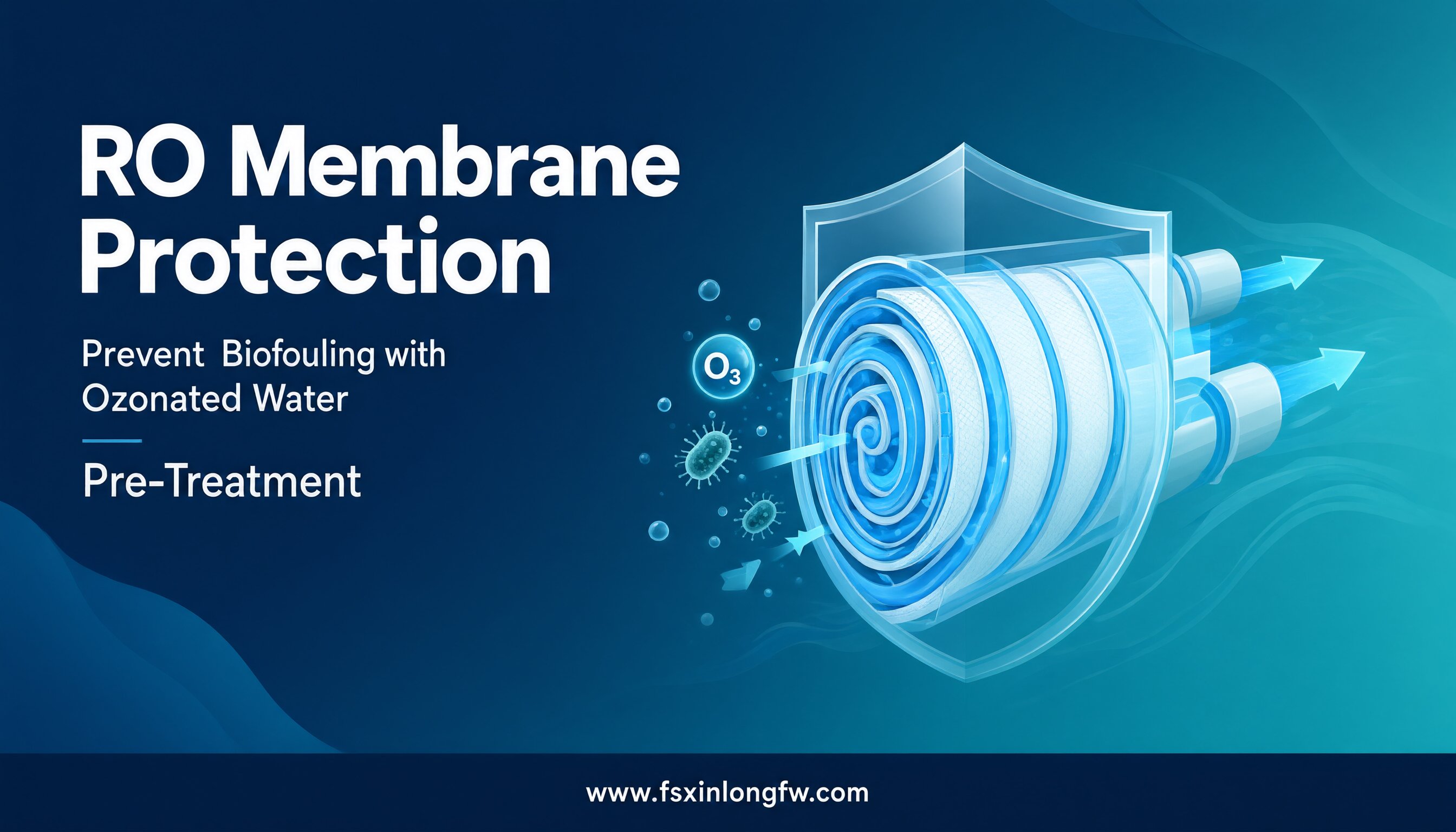
Implementing ozonated water pre-treatment provides an ultra-effective, chemical-free biocide barrier to achieve long-term RO membrane protection with ozone.
The Root Cause of Biofouling in RO Systems
Biofouling occurs when dissolved organic matter, bacteria, and algae pass through intake filters and adhere to the membrane spacers and active layer.
[ Raw Water Intake ] ──► [ Biological Growth ] ──► [ Sticky Biofilm Formed ] ──► [ Pressure Drop & Flux Loss ]- Biofilm Formation: Bacteria produce Extracellular Polymeric Substances (EPS), creating a matrix that shields bacteria from mild chlorine doses.
- Flux Loss & High Energy Costs: As bio-layer thickness increases, feed pressure must rise to maintain flow rates, driving up electrical costs.
- Frequent Chemical Cleaning (CIP): Repeated acid/alkaline wash cycles degrade membrane polymers, shortening lifespan from 3–5 years down to 12–18 months.
How Ozone Pre-Treatment Eliminates Biofouling
Ozone (O3) is one of the most powerful commercially available oxidizing agents. When injected during pre-treatment, it disrupts biological contaminants at a molecular level before raw water ever reaches the primary high-pressure pumps.
Key Engineering Advantages
- Cell Membrane Lysis: Ozone directly ruptures bacterial cell walls and inactivates viruses in seconds, preventing bio-layer attachment.
- Organic Matter Oxidation: Complex macromolecular organics break down into simpler compounds, reducing biological oxygen demand (BOD).
- Zero Biocide Resistance: Micro-organisms cannot build resistance against raw oxidation like they do with standard chemical biocides.
Typical Ozone Pre-Treatment Process Flow
Because polyamide RO membranes are sensitive to direct oxidants, a properly designed ozone system incorporates an upstream injection loop paired with a targeted residual destruction step.
| Process Stage | Equipment / Action | Primary Function |
| 1. Primary Oxidation | Ozone Generator + Venturi / Mixing Pump | Destroys 99.9% of bacteria, algae, and bio-organic loads. |
| 2. Contact Reaction | Contact Tank (2–5 min retention) | Ensures complete pathogen inactivation and oxidation. |
| 3. Residual Quenching | Sodium Bisulfite (SBS) or UV De-ozonation | Reduces residual ozone to < 0.01 ppm to protect polyamide membranes. |
| 4. High-Pressure RO | RO Pressure Vessels | Pure water filtration without biological biofouling risks. |
Pro Tip for Plant Operators: Pair your industrial ozone generator with an inline dissolved ozone monitor and automated SBS dosing. This ensures 100% disinfection performance in the pre-treatment tank while guaranteeing zero oxidant exposure at the RO membrane inlet.
Economic Benefits for Water Treatment Facilities
Integrating ozone into your desalination RO pre-ozone architecture yields immediate operational savings:
- Extended Membrane Lifespan: Protect expensive membrane element investments by avoiding frequent bio-sludge buildup.
- Reduced CIP Frequency: Cut back clean-in-place chemical purchases and system downtime by up to 60%.
- Lower Energy Consumption: Maintain stable differential pressures (△P) across pressure vessels to prevent unnecessary pump energy drag.
Custom Ozone Systems for Industrial Water Plants
Whether you are retrofitting a 500 m³/day pure water production facility or engineering a sea-water desalination pre-treatment line, choosing the right ozone equipment configuration is critical.
We specialize in high-efficiency industrial ozone generators engineered for continuous heavy-duty operation:
- Heavy-Duty Oxygen-Fed Systems: Concentrations up to 10–15 wt% for high dissolved ozone yield.
- Integrated Gas-Liquid Skids: Turnkey systems equipped with specialized mixing pumps and reaction tanks.
- Automated PLC Control: Real-time monitoring of gas concentration, dissolved ozone, and system safety interlocks.
Need Engineering Advice for Your System?
If you are dealing with rapid RO membrane fouling or designing a new water purification plant, our technical team can help you calculate the exact dosage, contact time, and de-ozonation requirements for your feedwater quality.
Contact Our Team Today to request a customized ozone pre-treatment proposal, equipment sizing calculation, or B2B distributor catalog.
Learn more about our industrial ozone equipment series.
Tags:
Related Posts