




Ozone Applications in Marine & Desalination: Ballast Water Treatment and Seawater Pre-treatment
Ozone Applications in Marine & Desalination: Ballast Water Treatment and Seawater Pre-treatment
Operating in marine environments presents relentless challenges: stringent environmental regulations, aggressive organic fouling, and the constant threat of corrosion. For marine engineers, shipbuilders, and desalination plant managers, choosing the right chemical-free disinfection technology is critical to maintaining operational efficiency and compliance.
Among modern oxidative solutions, the marine ozone generator has emerged as a high-performance alternative to traditional chlorination. Below, we examine how advanced ozone technology solves key bottlenecks in ballast water treatment and seawater desalination pre-treatment.
1. Ozone Systems in Ballast Water Treatment (BWTS)
Under the International Maritime Organization (IMO) D-2 standard and USCG discharge regulations, vessels must treat ballast water to eliminate harmful aquatic organisms before discharging into local coastal ecosystems.
[Seawater Intake] ──> [Mechanical Filter (40µm)] ──> [Ozone Injection & Gas-Liquid Mixing] ──> [Holding Tank] ──> [De-ozone/Discharge]How an Ozone-Based Ballast Water Treatment System Works
An integrated ballast water treatment ozone system operates through a micro-bubble gas-liquid mixing mechanism during ballasting:
- Primary Filtration: Incoming seawater passes through a 40-micron self-cleaning filter to remove larger solids and organisms.
- Side-Stream Ozone Injection: A small stream of seawater is diverted, supersaturated with high-concentration ozone gas produced by a marine ozone generator, and injected back into the main ballast pipeline via Venturi injectors.
- Rapid Inactivation: Ozone (O3) rapidly destroys cell membranes and DNA structures of invasive bacteria, zooplankton, and phytoplankton within seconds.
- De-Ozonation at Discharge: During de-ballasting, residual ozone quickly naturally degrades back into pure dissolved oxygen (O2). If necessary, a active neutralizer ensures zero toxic byproduct discharge.
Key Advantages for Shipowners & Naval Architects
- Zero Chemical Logistics: Eliminates the need to buy, transport, store, or refill hazardous chemical biocides on board.
- Corrosion Control via Precise Dose Monitoring: Ozone sensors control ozone injection levels, ensuring powerful disinfection while keeping vessel ballast tank coatings completely safe.
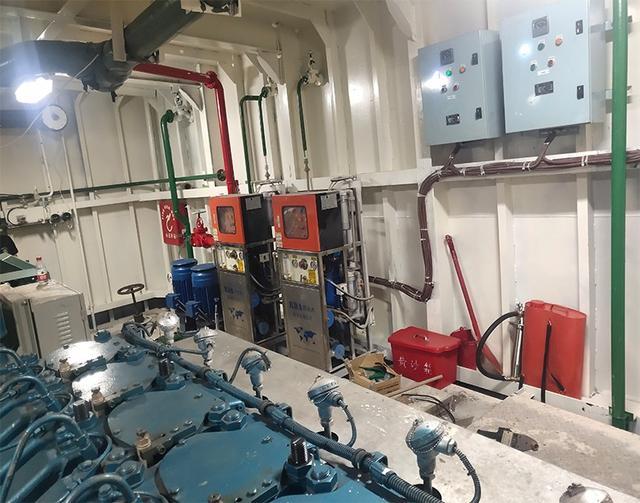
- Low Operating Footprint: Modern compact ozone units feature a small footprint, ideal for retrofits on container ships, bulk carriers, and tankers with tight engine room space.
Need technical specs for your fleet?Explore our marine-grade ozone equipment built for heavy-duty shipboard operations: [View Marine Ozone Generators]
2. Seawater Desalination Pre-Treatment: Mitigating RO Membrane Biofouling
In Reverse Osmosis (RO) seawater desalination facilities, organic matter, algae, and bacterial biofilms are the primary causes of membrane fouling. Uncontrolled biofouling leads to frequent chemical cleanings (CIP), higher energy consumption, and shortened membrane lifespans.
+---------------------------------------------------------------------------------+
|                         Seawater Desalination Process                           |
|                                                                                 |
|  [Raw Seawater] ──> [Ozone Pre-treatment] ──> [UF / Sand Filter] ──> [SWRO]     |
|                            │                                                    |
|                            └── Micro-flocculation & Biofilm Elimination         |
+---------------------------------------------------------------------------------+
The Role of Seawater Desalination Ozone Pre-Treatment
Integrating seawater desalination ozone pre-treatment ahead of the ultrafiltration (UF) or sand filtration stage provides three major processing advantages:
- Disinfection & Biofilm Prevention: Ozone kills marine microbes and algae instantly, preventing biological slime from settling on downstream piping and membrane surfaces.
- Micro-Flocculation: Ozone oxidizes refractory dissolved organic carbons (DOC), breaking long-chain polymers into smaller fragments. This enhances the filtration efficiency of sand/media filters, removing colloidal particles much more effectively.
- Iron and Manganese Removal: Ozone rapidly oxidizes soluble iron (Fe^2+ ) and manganese (Mn^2+) into insoluble precipitates, allowing easy removal during primary filtration before reaching delicate RO membranes.
Comparative Advantage over Traditional Chlorine
Unlike sodium hypochlorite or liquid chlorine dosing—which forms harmful Trihalomethanes (THMs) and can oxidize polyamide RO membranes if not properly dechlorinated—ozone naturally decomposes without leaving toxic halogenated residues.
3. Marine Growth Prevention Systems (MGPS) for Sea Chests & Piping
Beyond ballast and desalination, sea chest strainers, cooling water pipework, and heat exchangers on ships and offshore platforms suffer from marine biofouling (mussels, barnacles, and algae growth).
Installing a marine ozone generator as part of an onboard Marine Growth Prevention System (MGPS) ensures clear cooling water pipes, prevents overheating in main engines, and reduces operational downtime without toxic copper-ion discharges.
Technical Comparison: Disinfection Technologies in Marine Engineering
| Feature / Criteria | Marine Ozone Generator System | Electro-Chlorination (EC) | Direct Chemical Dosing |
| Disinfection Speed | Ultra-Fast (Seconds) | Moderate (Minutes) | Slow (Minutes) |
| Consumables Required | None (Generates from Ambient Air/O2) | Saltwater/Electricity | Chemical Refills (Chlorine/Biocides) |
| Chemical Residue | Zero (Reverts to O2) | Disinfection Byproducts (DBPs/THMs) | Persistent Toxic Residues |
| Membrane Compatibility | High (When properly controlled) | Low (Risks RO oxidation) | Low to Moderate |
| Footprint / Retrofit Fit | Compact & Modular | Large Electrolytic Cells | Requires Storage Tanks |
Engineering Considerations for Marine & Coastal Environments
To ensure long-term performance under harsh, corrosive ocean conditions, engineered ozone systems must incorporate:
- Corrosion-Resistant Materials: 316L Stainless Steel, Teflon (PTFE) ozone delivery lines, and high-purity ceramic dielectric tubes.
- Stable Feed-Gas Supply: High-purity oxygen concentrators paired with heat-reactivated desiccant air dryers to ensure stable ozone concentration (100 g/Nm^3).
- Automation & Marine PLC Integration: Standard Modbus RS485 / CANbus protocols for seamless communication with the vessel’s integrated automation system (IAS) or desalination control room.
Upgrade Your Marine Oxidation Infrastructure
Whether you are designing a compact ballast water treatment ozone system, retrofitting a commercial ship’s cooling pipeline, or optimizing a seawater RO desalination plant, our engineering team supplies heavy-duty, marine-grade ozone generation systems built to withstand harsh salt-spray environments.
Ready to Optimize Your Marine Water Treatment Workflow?
- Explore Our Marine Solutions: Check detailed flow rates, power consumption, and equipment sizes.👉 [Visit Our Marine & Industrial Ozone Product ]
- Request a Custom Quote & Engineering Support: Contact our technical specialists to calculate your required ozone dosage (g/h or kg/h) based on water flow rate and salinity parameters.👉 [Contact Our Marine Application Engineers Today]
Tags:
Related Posts