




Cooling Tower Ozone Water Treatment: Legionella & Algae Control
How Industrial Cooling Tower Ozone Water Treatment Prevents Legionella and Algae
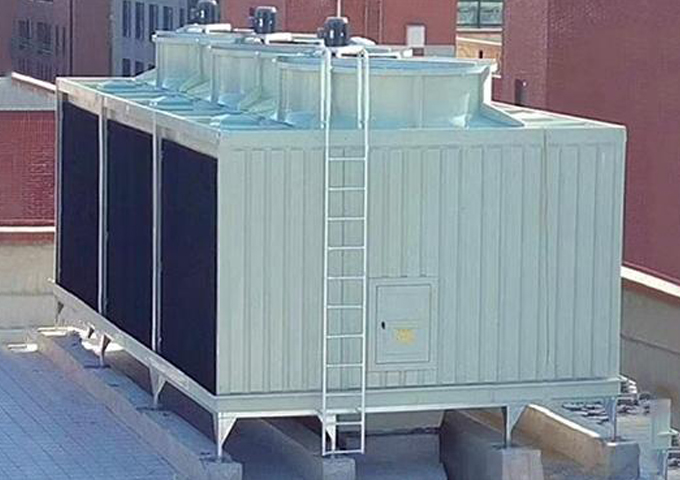
Managing an industrial cooling tower or large-scale commercial HVAC system comes with a constant operational challenge: microbial growth.
In warm, recirculating cooling water, bacteria—most notably Legionella pneumophila—and stubborn algae thrive. Traditional chemical treatments like chlorine and bromine require continuous chemical handling, frequent blowdown, and strict regulatory oversight.
As facility managers and plant engineers face stricter environmental compliance and rising chemical costs, cooling tower ozone water treatment has emerged as a superior, chemical-free alternative.
This article explores how an advanced legionella prevention ozone generator system works, its effectiveness in cooling tower algae control, and why upgrading your facility's water treatment can protect both your operations and your bottom line.
The Hidden Risks: Biofilm, Algae, and Legionella in Cooling Towers
Cooling towers act as giant air scrubbers, drawing in dust, pollen, and airborne bacteria while providing an ideal incubator temperature for microorganisms. Without robust water treatment, systems quickly suffer from:
- Legionella Outbreaks: The warm, misting environment of a cooling tower is a primary breeding ground for Legionella, posing severe health and legal risks to facility owners.
- Algae Proliferation: Sunlight and nutrients in open-loop towers trigger rapid algae growth, clogging strainers, reducing heat transfer efficiency, and fostering biofilm.
- Biofilm Formation: Bacteria secrete a protective slime layer (biofilm) that shields them from standard biocides, accelerating equipment corrosion and scaling.
Traditional chemical programs often struggle to penetrate deep biofilms, leading to higher energy consumption and frequent mechanical cleanings.
How Ozone Water Treatment Works in Cooling Systems
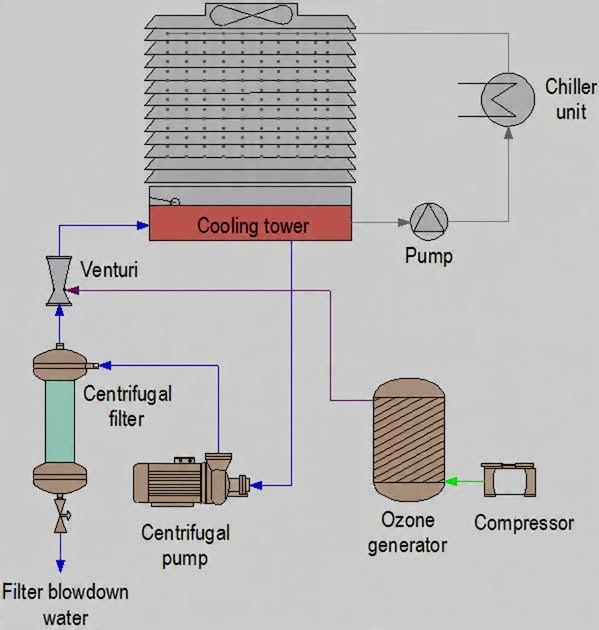
Ozone (O3) is one of the most powerful oxidizers available for industrial water disinfection. When generated on-site and injected into the cooling tower slipstream or recirculating line, it rapidly attacks organic contaminants.
1. Direct Disinfection and Oxidation
Ozone destroys bacterial cell walls, viruses, and fungi instantly upon contact. Unlike chlorine, which creates harmful disinfection byproducts (DBPs) like trihalomethanes, ozone reverts safely back to dissolved oxygen ($O_2$) leaving no toxic chemical residuals.
2. Complete Biofilm Removal
Because ozone is a powerful gas-infused liquid, it penetrates existing biofilm layers, breaking down the extracellular polymeric substances (EPS) that protect colonies of bacteria. This prevents Legionella from colonizing inside the system piping.
3. Natural Coagulation and Algae Elimination
For cooling tower algae control ozone works by destroying the cellular structure of algae and organic matter, causing them to clump together so they can be easily filtered out by side-stream sand filters or removed via blowdown.
Key Benefits of Installing a Legionella Prevention Ozone Generator
Switching from conventional chemical dosing to an automated industrial ozone system delivers measurable operational advantages:
| Benefit | Traditional Chemicals | Ozone Water Treatment |
| Chemical Handling | High risk, hazardous storage, regular manual dosing | Zero hazardous chemical storage (generated on-site) |
| Legionella Control | Dependent on biocide rotation and persistence | Instantaneous, high-efficiency pathogen destruction |
| Blowdown Water | Requires specialized wastewater treatment | Safe discharge with no harmful chemical residuals |
| Energy Efficiency | Decreases over time due to scale and biofilm buildup | Maintains clean heat exchangers, lowering HVAC energy use |
Best Practices for Implementing Ozone in Industrial Cooling Towers
To maximize the performance of your ozone treatment system, consider the following implementation steps:
- Water Quality Audit: Assess makeup water hardness, total dissolved solids (TDS), and pH levels to ensure optimal ozone mass transfer.
- Sizing the Ozone Generator: Select a commercial-grade generator matched to your cooling tower’s recirculation flow rate and cooling tonnage.
- Side-Stream Injection: Utilize a dedicated venturi injector on a side-stream loop to achieve high ozone dissolution efficiency without exposing main line pumps to gas pockets.
- Automated ORP Monitoring(optional): Integrate Oxidation-Reduction Potential (ORP) sensors to regulate ozone output automatically based on real-time water demand.
Upgrade Your Cooling Tower Water Treatment Today
Are you looking to eliminate chemical dependency, ensure strict compliance with health regulations, and reduce long-term maintenance costs?
Our engineering team specializes in high-efficiency industrial ozone generators tailored for cooling towers of all sizes.
- Contact Our Water Treatment Experts Today to request a custom system design and technical quotation.
- Explore Our Industrial Ozone Generator Series to find the right capacity for your facility.
Tags:
Related Posts