




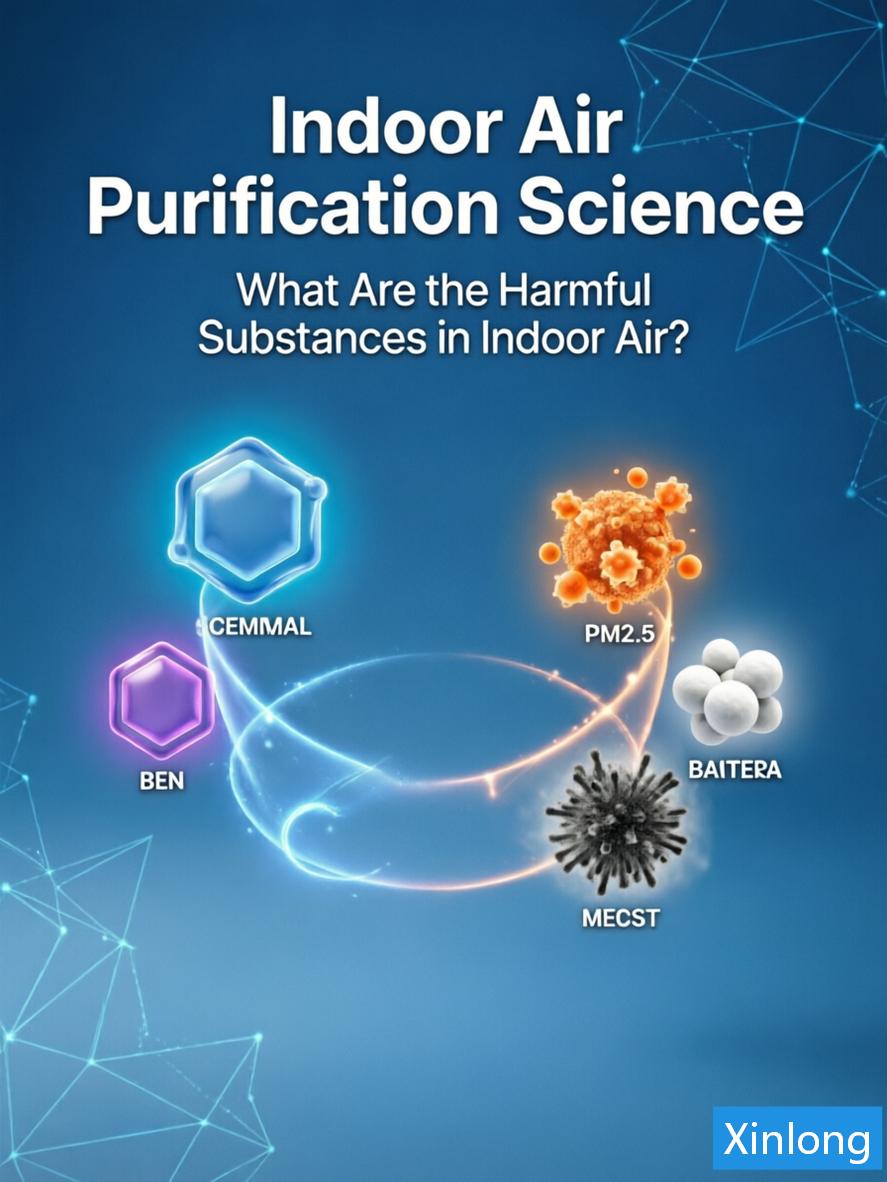
Air Purification Science: What Are the Harmful Substances in Indoor Air?
We spend approximately 90% of our time indoors. But is the air you breathe at home or in the office truly safe? While outdoor pollution often grabs the headlines, indoor air quality (IAQ) can be just as critical to your health. From invisible chemical off-gassing to biological allergens, understanding what lurks in your indoor air is the first step toward a healthier living environment.
In this guide, we will explore the common indoor air pollutants, their impact on your family's health, and the science behind effective air purification.
1. The Invisible Threat: Common Indoor Harmful Substances
Indoor air pollution is a complex mixture of particles and gases. These pollutants generally fall into three categories: chemical, particulate, and biological.
Chemical Pollutants: The "Silent" Off-Gassers
These are often released from building materials, furniture, and household products.
- Formaldehyde (HCHO): A colorless gas with a pungent odor, formaldehyde is commonly found in pressed wood products (like plywood and MDF), glues, adhesives, and some fabrics. It is a known human carcinogen that can cause eye, nose, and throat irritation.
- Volatile Organic Compounds (VOCs): This is a broad category of carbon-based chemicals that evaporate at room temperature. Sources include paints, varnishes, cleaning supplies, and air fresheners.
* Benzene: Often found in tobacco smoke, stored fuels, and paint supplies. It is a known carcinogen linked to blood disorders.
*TVOC (Total Volatile Organic Compounds): This represents the sum of all VOCs in the air. High levels of TVOC can lead to "Sick Building Syndrome," causing headaches, dizziness, and fatigue.
- Ammonia & Radon: Ammonia often comes from concrete additives or cleaning fluids, while Radon is a radioactive gas that seeps from the ground and can accumulate in basements.
Particulate Matter: The Physical Intruders
- PM2.5 & PM10: These are tiny particles with a diameter of 2.5 micrometers or less. They can come from outdoor pollution entering through windows, cooking fumes, or smoking. Because of their small size, PM2.5 can penetrate deep into the lungs and even enter the bloodstream, posing risks to cardiovascular health.
Biological Pollutants: The Living Allergens
- Mold & Mildew: Thriving in damp areas like bathrooms or basements, mold releases spores into the air that can trigger severe allergic reactions and asthma.
- Dust Mites & Bacteria: Microscopic organisms that live in bedding, carpets, and upholstery. Their waste products are potent allergens for many people.
Note: It is crucial to understand that pollutants often have a synergistic effect. For example, the combination of formaldehyde and PM2.5 can cause more severe inflammation in the respiratory system than either pollutant alone.
2. Health Hazards: Who is Most at Risk?
Poor indoor air quality affects everyone, but certain groups are significantly more vulnerable to the effects of air pollution.
| Pollutant Type | Common Symptoms | Long-term Risks |
|---|---|---|
| Formaldehyde & VOCs | Watery eyes, burning sensation in throat, nausea, dizziness. | Respiratory diseases, liver/kidney damage, cancer (Leukemia). |
| PM2.5 / Particles | Coughing, sneezing, shortness of breath, eye irritation. | Heart disease, aggravated asthma, reduced lung function. |
| Biological (Mold/Mites) | Runny nose, itchy skin, congestion, watery eyes. | Chronic sinusitis, hypersensitivity pneumonitis, asthma attacks. |
Vulnerable Groups
- Children: Their lungs are still developing, and they breathe more air per pound of body weight than adults.
- The Elderly: Often have pre-existing heart or lung conditions that can be aggravated by pollution.
- Pregnant Women: Exposure to pollutants like benzene and formaldehyde can affect fetal development.
3. How to Detect Indoor Air Quality
You cannot manage what you do not measure. Relying solely on your sense of smell is not enough, as dangerous gases like Radon or low levels of Formaldehyde may be odorless.
Professional Testing (Recommended)
For the most accurate results, especially in newly renovated spaces, hire a professional third-party testing agency. They use high-precision instruments (like gas chromatographs) to measure specific levels of Formaldehyde, Benzene, TVOC, and Ammonia.
DIY Monitors
Consumer-grade air quality monitors can provide real-time data on PM2.5 and general VOC levels. While less precise than professional labs, they are excellent for tracking daily trends and identifying pollution spikes (e.g., while cooking).
The "Smell" Test
If you notice a distinct chemical smell, or if you experience symptoms like frequent blinking or tearing eyes upon entering a room, these are strong indicators of high VOC or Formaldehyde levels.
4. The Importance of Regular Air Purification
Once you identify the pollutants, the next step is mitigation. While opening windows (ventilation) is the most economical way to dilute indoor pollutants, it is not always effective—especially during high outdoor pollution days, extreme weather, or for pollutants trapped deep within furniture.
This is where regular air purification becomes essential.
Why Purification Matters
- Continuous Protection: Unlike ventilation, which is intermittent, air purifiers work 24/7 to capture pollutants.
- Targeted Removal: Modern purifiers are designed with specific technologies to tackle different threats.
Choosing the Right Technology
To effectively clean your indoor air, look for a purifier that combines multiple filtration stages:
- HEPA Filters: The gold standard for removing PM2.5, dust, pollen, and mold spores. A True HEPA filter captures 99.97% of particles as small as 0.3 microns.
- Activated Carbon: Essential for adsorbing gases and odors. High-quality carbon filters can trap Formaldehyde, Benzene, and TVOCs.
- Advanced Technologies (PCO/UV): Some units use Photocatalytic Oxidation (PCO) or UV light to break down chemical structures of VOCs and kill bacteria/viruses, preventing them from recirculating.
A Holistic Approach
Remember, air purification is part of a system.
- Source Control: Choose low-VOC paints and furniture.
- Ventilation: Open windows when outdoor air quality is good.
- Purification: Run your air purifier continuously in occupied rooms.
- By understanding the science of indoor air, you can take control of your environment and ensure that every breath you take contributes to your health, rather than detracting from it.
Related Posts